
Cars, bikes and taxis
- +Private, seated, flexible
- +Comfortable and direct
- –Congestion
- –Poor energy use
- –High public and private cost
- –Accidents and emissions
- Not a solution
Technology
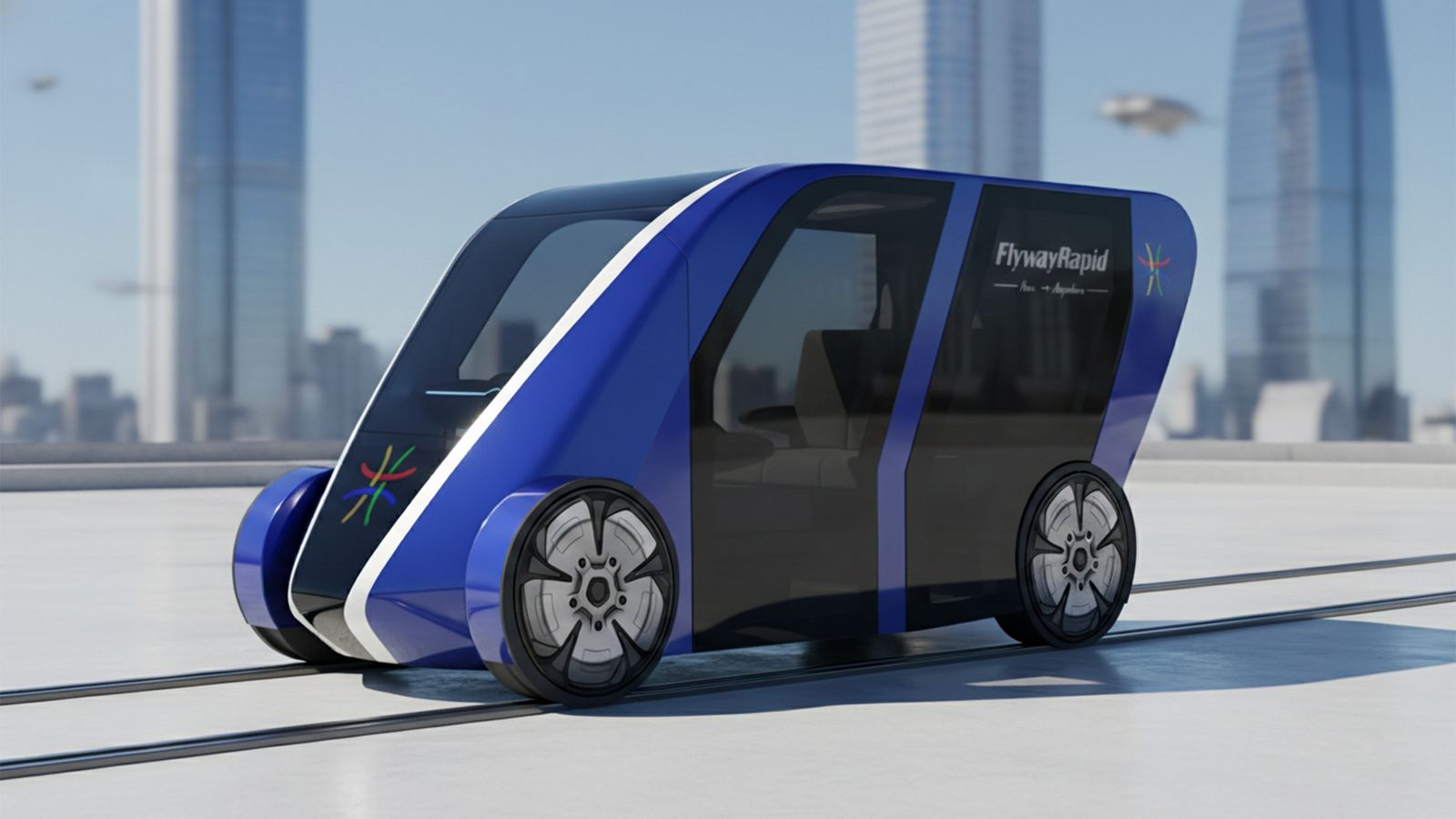
The question is not only whether the problems can be named. It is how a system can take the advantages of the car and of mass transit, drop the disadvantages of both, and add something neither offers: nonstop, private, seated travel at about 100 km/h average in a city.
For a century, private cars and mass transit lived in separate worlds. FlywayRapid merges the advantages of both, drops the disadvantages — and adds what neither offers: nonstop, private, seated travel at about 100 km/h average.

Neopod
A passenger goes from their station to any other station directly — no timetable, no stop at stations along the way, no change of vehicle. The path is assembled for that person, in real time.
The network can cover a premium locality, an airport, a special economic zone, a city, or a region. Every station is connected to every other. Unidirectional lines keep cost down in lower-density areas; bidirectional lines serve high demand. The two can meet, so the system thickens where it must and stays lean where it can.

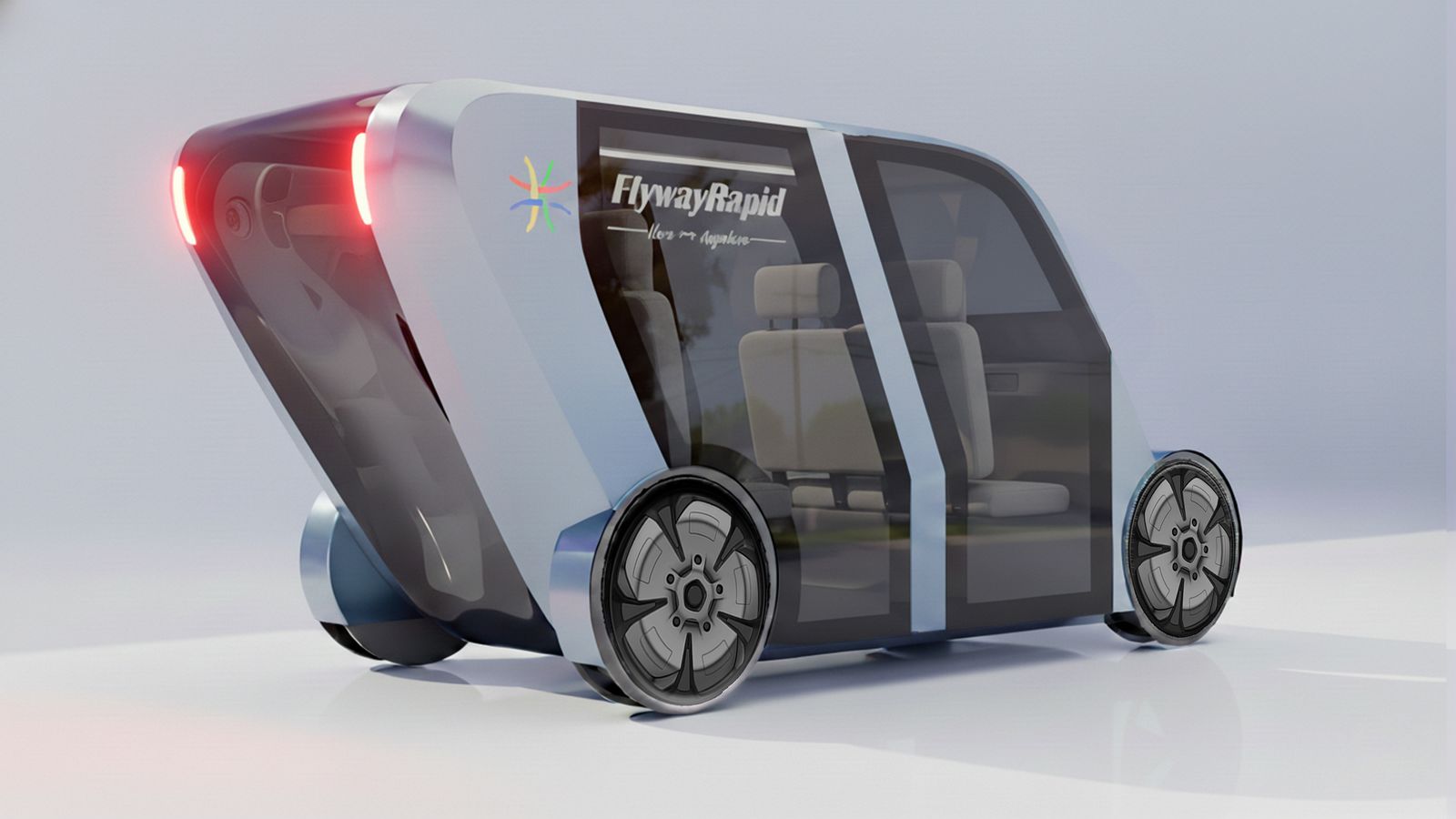
One vehicle, origin to destination. No interchange, no waiting on a platform for the next line.
The Neopod does not halt at every station. That is what makes a 100 km/h urban average plausible.
A grid, not a single corridor. Demand in one district does not force a metro-scale line through a quiet one.
Flyway motor
As part of the efficiency work, FlywayRapid developed its own motor: a specialised permanent-magnet synchronous design that increases drive efficiency by about 20%. It combines the direct-drive character of a hub motor with the advantages of a conventional PMSM / BLDC machine — and avoids the usual penalties of both.
The motor has uses beyond this network, including conventional electric vehicles. It is one of many product-level optimisations in the system, not the whole story.
Vehicles take energy from the grid as they move. There is no large traction battery to haul, recharge, or replace.
We work with cities, real-estate projects, industrial sites and partners who want to bring this network to people who currently lose hours on the road.