

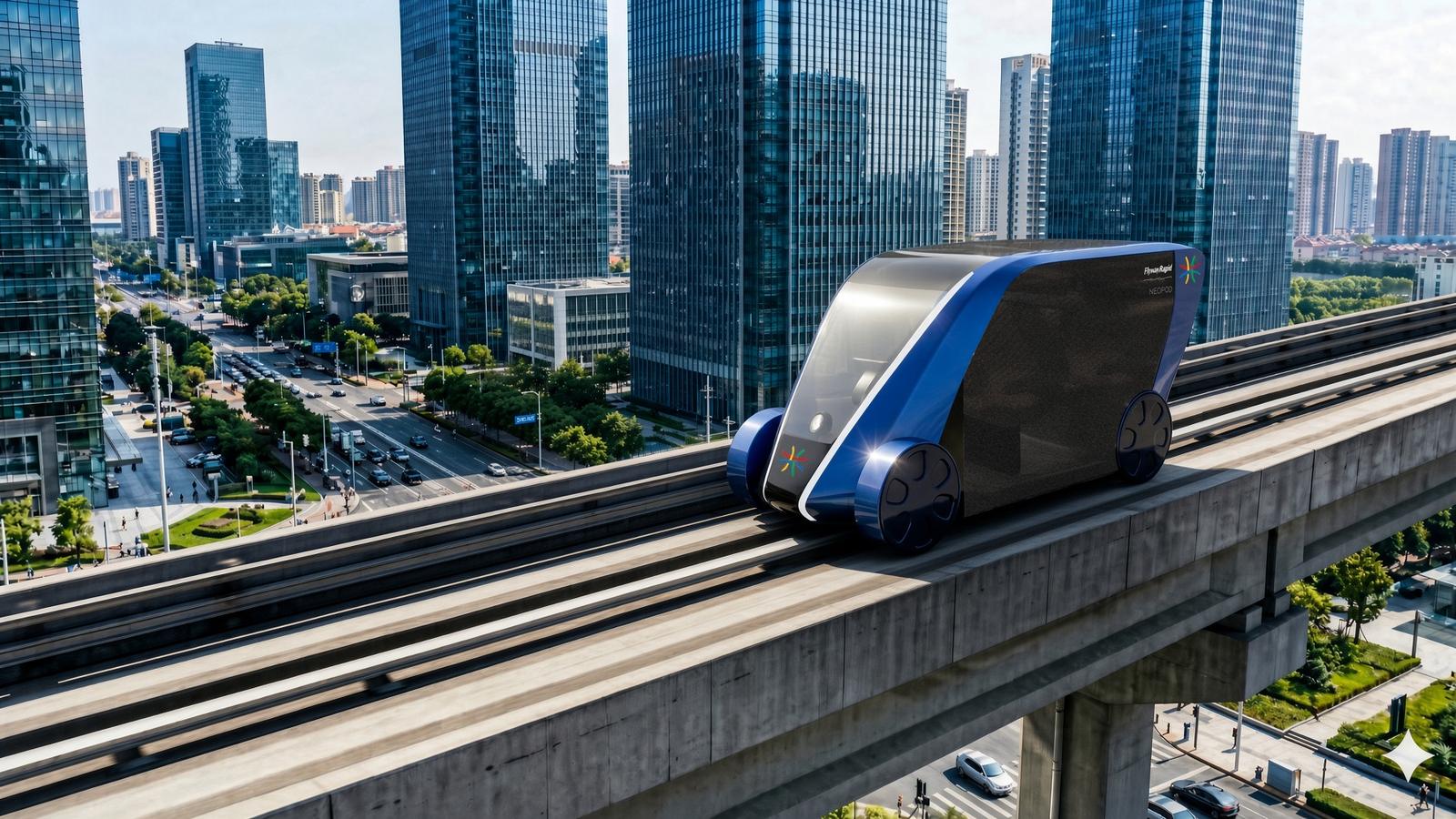
Breakthrough technology in transportation
From office to home in minutes, not hours.
FlywayRapid is a network of autonomous electric vehicles — Neopods — running on dedicated, intelligent infrastructure. It is designed for an average urban speed of about 100 km/h, against roughly 20 km/h in cities today.

~100 km/h
Designed average urban speed
5×
Faster than typical city travel
Grid power
No onboard battery pack
Nonstop
Origin to destination, no interchange
What FlywayRapid is
A new class of urban speed.
Private vehicles are comfortable and slow. Mass transit is efficient and tiring. For a hundred years those have been the only two serious choices.
FlywayRapid puts seated, private vehicles on a dedicated network that never mixes with street traffic. There is no timetable. There is no change of vehicle. The path is computed for you, in real time, and you travel nonstop.
No city currently offers that combination at about 100 km/h average. FlywayRapid is built to be the first network that does.
The problem we solveHow a trip works
Walk in. Sit down. Go.
01
A nearby station
Stations sit on the network, close to where people already live and work — campuses, districts, airports, cities.
02
Board a Neopod
You travel seated and in private. No standing in a packed carriage. No driving in mixed traffic.
03
Nonstop to your stop
The vehicle does not pause at stations along the way. The route is assembled for this trip, in real time.
04
The network continues
After you alight, the Neopod stays in service for the next passenger. Vehicles and guideway are used as a system, not as private cars at rest.
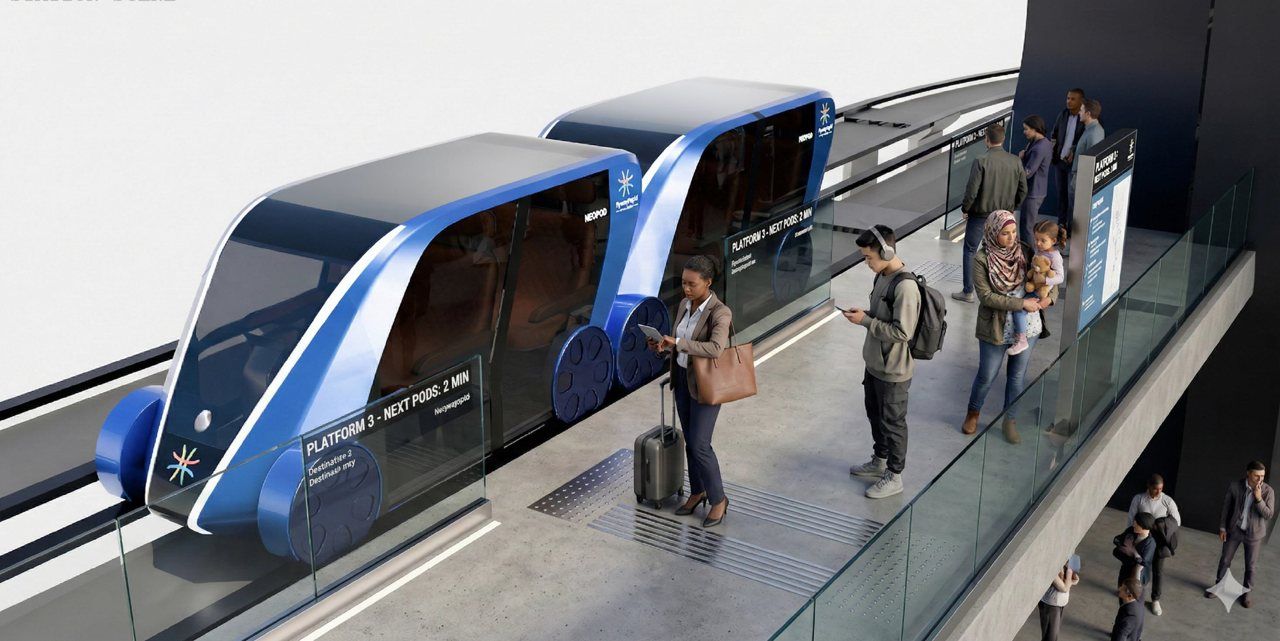
Practicality and safety first
Built as infrastructure, not as a gadget.
FlywayRapid sits at the intersection of civil, electrical, mechanical, automotive, electronics and software engineering. Vehicles take power from the grid. A Network Operating System coordinates movement so the guideway does not choke. Safety is designed in, not added later.
Two network types — unidirectional for lower-density areas, bidirectional for high demand — can meet in one system, so a city does not pay metro prices for a quiet suburb.
How the system worksTalk to us about a FlywayRapid network.
We work with cities, real-estate projects, industrial sites and partners who want to bring this network to people who currently lose hours on the road.